

Last updated: August 28, 2026 · 8-minute read
Maybe your vibrator worked a little too well. You put it down, and the area still felt buzzy, muted, or simply less responsive than it had a few minutes earlier. Then came the anxious search: Can a vibrator make you less sensitive?
It is an understandable worry—and the internet has given it a frightening nickname. But a short-lived change after strong or prolonged stimulation is not the same as permanent damage. The useful question is not whether you have “ruined” your sensitivity. It is whether the change is temporary and familiar, or persistent and asking for professional attention.
In this guide
What this fear is really asking
When people worry about “desensitization,” they are often describing one of three different experiences:
- a temporary numb or tingly feeling immediately after a high-intensity session;
- a preference for the steady stimulation a vibrator provides;
- a new or lasting change in sensation or orgasm that feels concerning.
Those experiences should not be treated as interchangeable. The first may simply mean your body wants a pause. The second is a preference, not proof of injury. The third deserves a wider look because sensation can be affected by medications, hormonal changes, pelvic or neurologic conditions, pain, stress, and other health factors.
So, what does the research actually say?
One nationally representative US survey asked 2,056 adult women about vibrator use and related genital symptoms. Vibrator use was common, while reported side effects were uncommon; most users reported no symptoms. Because the study was cross-sectional and relied on self-reports, it cannot prove what caused an individual symptom. It does, however, offer more useful context than a frightening social-media phrase.
The International Society for Sexual Medicine explains that “dead vagina syndrome” is not an established medical diagnosis. Its clinician-reviewed guidance says decreased sensitivity reported after vibrator use is usually temporary. In other words, a brief change can happen; permanent “deadening” from ordinary use has not been established.
That distinction matters. Reassurance should not become dismissal. If your sensation does not return to its familiar baseline, or the change keeps happening in a way that worries you, your experience deserves proper medical attention—not a viral label.
Why you may feel temporarily “buzzed out”
A vibrator offers fast, repetitive stimulation. When the setting is strong, the contact is very focused, or the session is longer than your body enjoys, the area may feel temporarily muted afterward. Think of that sensation as feedback rather than failure.
You do not need to prove that you can tolerate the highest setting. Pleasure is not a power test, and stronger does not automatically mean better. Some days a level feels perfect; on another day, the same level may feel overwhelming. Your response can shift with arousal, stress, hormones, sleep, medication, and context.
Preferring a vibrator also does not mean you have trained your body incorrectly. It provides a consistent sensation that fingers, oral stimulation, or penetration may not reproduce in exactly the same way. Knowing what works for you is information—not dependence.
Try these comfort-first adjustments
If you feel comfortable and have no concerning symptoms, small changes are usually more helpful than an all-or-nothing “detox.”
- Begin lower. Start below your usual intensity and give arousal time to build before increasing it.
- Move the contact point. Try placing the vibrator beside the most sensitive area instead of directly on it.
- Soften the sensation. Use the product through underwear or another thin layer of fabric if the manufacturer’s instructions allow it.
- Pause before discomfort. A break can help you notice whether you still want more stimulation or whether your body is finished for now.
- Change one variable at a time. Adjust intensity, placement, pressure, or duration—not all four—so you can learn what makes the difference.
If you are still learning the controls, our pressure-free first-time vibrator guide explains how to begin slowly and treat each session as exploration rather than a performance.
Do you need to stop using a vibrator?
Not automatically. If the sensation is comfortable and returns to normal after a break, you may simply prefer a lower setting, more indirect contact, or shorter sessions. You can also vary your routine because you are curious—not because you owe anyone a different kind of orgasm.
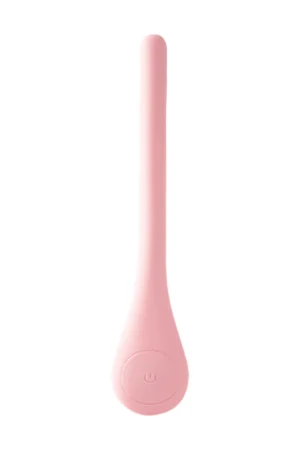
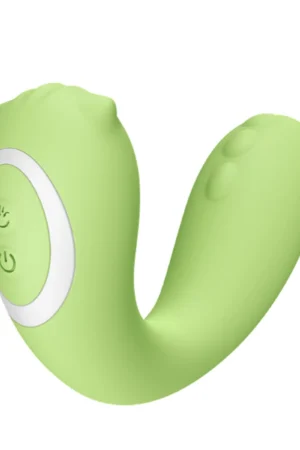
If a particular shape makes it difficult to control placement or intensity, the issue may be product fit rather than vibrator use itself. Our guide to choosing a design with the control and shape you prefer can help you compare options without assuming maximum power is the goal.
When the change deserves more attention
Pause use and talk with a qualified healthcare professional if numbness lasts much longer than expected, repeatedly returns, appears suddenly without a clear connection to stimulation, or comes with pain, cuts, bleeding, swelling, persistent irritation, unusual discharge, or weakness.
A new change in orgasm or sensation can have many possible explanations, including medication effects, menopause or other hormonal changes, health conditions, pelvic pain, stress, and relationship factors. A clinician can consider the whole picture. An online article cannot diagnose the cause.
Frequently asked questions
How long should temporary numbness last?
There is no universal timer. In research summarized by ISSM, most reported numbness resolved within an hour. What matters is whether sensation returns to your familiar baseline. If it persists, recurs, or worries you, stop and seek individual advice.
Can a vibrator permanently stop me from orgasming?
Current evidence does not establish typical vibrator use as a cause of permanent loss of orgasm. A new or lasting change should still be evaluated because physical, medication-related, emotional, and relationship factors can all contribute.
Does wanting a stronger setting mean I am becoming desensitized?
Not necessarily. Arousal and preferred intensity vary. If you keep increasing the setting because lower levels no longer feel familiar, take a pause and experiment with placement, pressure, and pace. Persistent loss of sensation is different from simply preferring more intensity.
Should I “reset” by avoiding my vibrator for weeks?
There is no evidence-based universal reset period. A short break may be comfortable after temporary numbness, but you do not need to punish or retrain yourself. Follow your symptoms and seek care if they do not resolve.
A note on wellbeing: This article provides general educational information, not medical advice or a diagnosis. Stop using any product that causes pain, injury, persistent irritation, or numbness, and follow the manufacturer’s instructions for use and care.
Sources
- Herbenick D, et al. Prevalence and characteristics of vibrator use by women in the United States. The Journal of Sexual Medicine.
- International Society for Sexual Medicine. Is “dead vagina syndrome” a real medical condition?
- Herbenick D, et al. Genital vibration for sexual function and enhancement: best-practice recommendations.
- Mayo Clinic. Anorgasmia in women: symptoms and causes.


Comment (1)