

Last updated: August 18, 2026 · 9-minute read
Choosing your first vibrator can feel strangely high-stakes. There are countless shapes, settings, materials and promises—yet the most useful question is much simpler: what would help you feel comfortable enough to stay curious?
Your first choice does not need to predict everything you will ever enjoy. It only needs to give you a safe, manageable way to notice your preferences. This comfort-first guide explains how to compare vibrators without pressure, confusing jargon or the idea that there is one “best” design for every body.
In this guide
Start Here: Your Beginner Pathway
You do not need to learn everything at once. Choose the question that matches where you are now, then continue at your own pace.
-
If you are ready for your first experience:
Read how to use a vibrator for the first time without pressure. -
If you want to understand cleaning and storage:
Follow our material-aware vibrator cleaning guide. -
If you are concerned about changes in sensitivity:
Learn what the evidence says about vibrators and sensitivity. -
If a vibrator is your most reliable route to orgasm:
Read why needing or preferring a vibrator can be normal. -
If you want to introduce one into partnered intimacy:
See how to talk to your partner about using a vibrator.
Start with the experience—not the product category
Before comparing specifications, ask what kind of moment you want the product to support. Do you want something quick and simple, a slower private ritual, hands-free convenience, or the flexibility to explore more than one style of use?
A peer-reviewed best-practice paper on genital vibration notes that first-time users can benefit from products that offer flexibility, multiple speed or intensity options, and controls that make experimentation easier. That does not mean “more features” is always better. It means the product should give you room to adjust without making the experience feel technical or overwhelming.
Write down your top two priorities before you shop. For example:
- quiet and discreet;
- simple controls;
- a slim or flexible shape;
- wearable or hands-free use;
- several gentle settings;
- easy cleaning and storage.
This short list will do more for your decision than comparing twenty products at once.
1. Decide between external, internal and versatile designs
Design labels are useful only when they describe how a product is intended to be used. Some compact vibrators are designed for external touch. Some longer designs are made for internal use. Others are shaped to offer more than one option.
If you are unsure, a versatile design can leave room to explore—but only if its size, shape and controls already feel approachable to you. Never assume that a slim shape is automatically intended for every type of use. Read the product description and manufacturer instructions before using any design internally.
A practical rule: choose based on the kind of contact you want now, not the version of yourself you think you should become.
2. Put control ahead of maximum power
Product pages often highlight the number of modes or the strength of a motor. For a beginner, the more important question is whether the controls let you make small, predictable changes.
Look for:
- a clearly identifiable power button;
- low settings that genuinely feel gentle;
- simple movement between levels or patterns;
- controls you can find without stopping to inspect the product;
- a reliable way to turn the product off quickly.
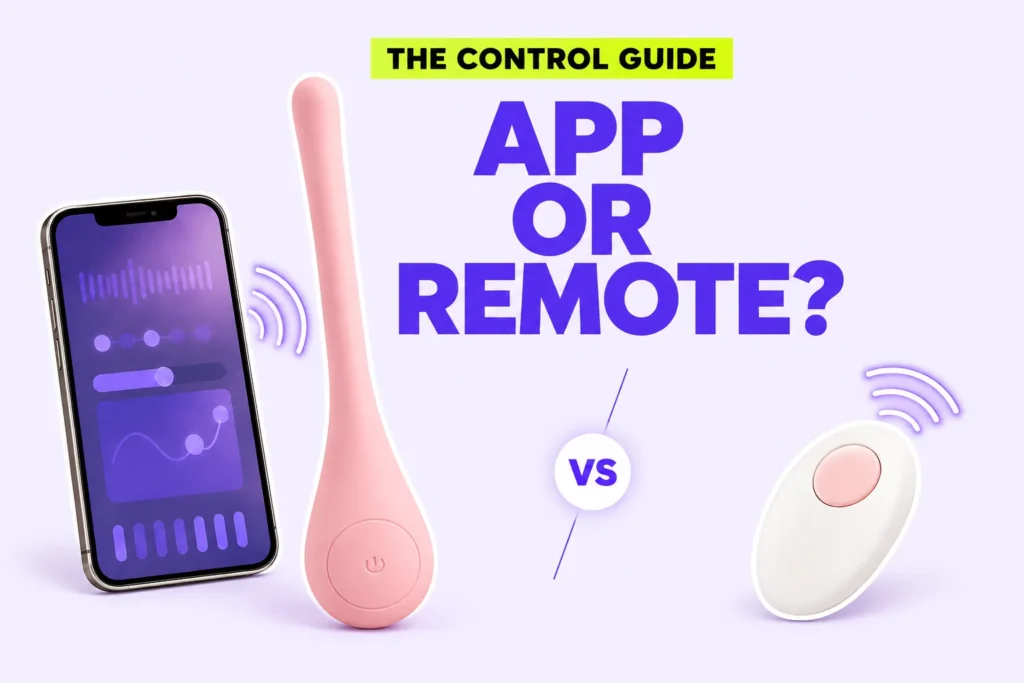
Separate intensity controls can be easier to understand than cycling through a long sequence. App control may be helpful if you value remote adjustment or prefer to see settings on a screen, but it also adds setup, connectivity and privacy considerations. Choose it because it supports your ritual—not because it sounds more advanced.
If you want to compare these control methods more closely, our guide to app-controlled and remote-controlled vibrators explains onboard, nearby and long-distance control.
3. Compare broad and focused sensation
Shape influences how concentrated the sensation may feel. A smaller contact point generally offers more focused placement, while a wider surface can distribute sensation over a broader area. Neither is inherently better.
If you do not yet know your preference, consider a shape that can be held at different angles or used through a layer of fabric at first. That gives you ways to soften or redirect the sensation without changing products.
Flexibility can also matter. A bendable neck or body may help a product adapt to your preferred angle, but the mechanism should feel stable rather than loose. Read the care instructions before bending any product; not every elongated design is intended to flex.
4. Check material information before buying
A trustworthy product page should tell you what the body-contact surface is made from and how to care for it. Smooth, nonporous materials are generally easier to clean than porous ones, but the exact cleaning method still depends on the product’s construction, motor, seams and water-resistance rating.
Look for clear answers to these questions:
- Is the body-contact material identified?
- Does the manufacturer provide cleaning instructions?
- Is the product waterproof, water-resistant or neither?
- Are lubricant compatibility and storage instructions stated?
- Are charging ports or battery compartments protected?
Be cautious when a listing relies on vague phrases such as “premium material” without naming the material or explaining care.
5. Let size and grip support comfort
Size is not a measure of quality. Consider both the part designed for contact and the part you will hold. A product may look compact but still be awkward if the controls sit beneath your grip. A longer product may feel easier to angle but less discreet to store.
Use the listed dimensions rather than judging from lifestyle photography alone. If dimensions are missing, ask before buying. Think about:
- whether the handle will be comfortable for your hand;
- whether the product feels visually approachable;
- where you will store it;
- whether you want it to travel with you;
- whether flexibility or a wearable shape matters more than length.
6. Include privacy in your definition of quality
Quiet operation, discreet storage and uncomplicated charging are not superficial details. If you share a home, travel often or simply value privacy, these features can determine whether a product fits your real life.
Noise descriptions are subjective, so treat “whisper quiet” as a claim to verify rather than a universal fact. Reviews can offer context, but room acoustics, intensity level and how a product is held can all change perceived sound.
For a more practical privacy checklist, learn how to choose a quiet vibrator by comparing motor sound, vibration transfer, storage and controls separately.
Also check the charging method and approximate charging routine. A proprietary cable is manageable when stored carefully; a missing cable can make the product unusable. Keep charging accessories labeled and separate from similar-looking cords.
7. Consider the care routine before the first use
A product that is difficult to clean or store may not suit a low-effort ritual. Before purchasing, read the manufacturer’s cleaning instructions and our guide to cleaning and storing a vibrator.
Planned Parenthood advises cleaning sex toys before and after use and following the instructions that come with the product. If a toy is shared, barriers and cleaning between users or body areas become especially important.
A first-vibrator checklist
Use this list to compare your final two or three options:
- Intended use: Does the manufacturer clearly describe where and how it may be used?
- Comfort: Do the size, shape and contact area feel approachable?
- Control: Can you start low and change one setting at a time?
- Material: Is the body-contact material clearly identified?
- Care: Are cleaning, drying and storage instructions available?
- Water rating: Is it waterproof, water-resistant or non-waterproof?
- Privacy: Do noise, charging and storage fit your home and routine?
- Trust: Are dimensions, policies and support information easy to find?
Two different starting points in the Eve’s Whisper collection
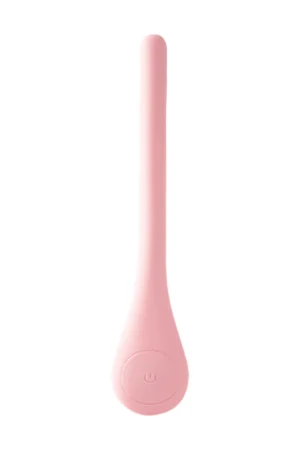
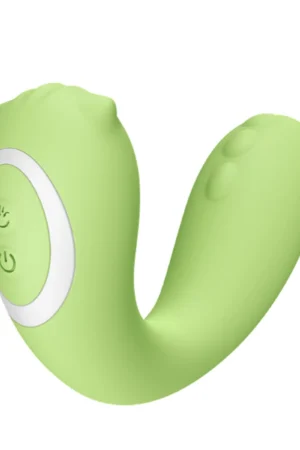
If flexibility and app-based control are high on your list, the SERA app-controlled bendable personal massager is one format to compare. If you are more interested in a wearable, dual-stimulation format, explore the Little Monster wearable personal massager.
These are different starting points, not universal recommendations. Read each product page, verify the current specifications and choose the format that fits your priorities. You can also browse the full Eve’s Whisper collection.
What to do when your first choice is not perfect
Preference is learned through experience. You may discover that you like a broader surface, a gentler setting, a different grip or a simpler control layout. That does not mean you chose badly. It means you gained useful information about yourself.
When your product arrives, do not make the first experience a performance test. Read the manual, charge and clean the product, learn the controls in your hand, and begin at the lowest setting. Our first-time vibrator guide walks through that process without pressure.
Frequently asked questions
What type of vibrator is best for a beginner?
There is no single best type. A beginner-friendly option usually offers simple controls, a genuinely low starting setting, a comfortable shape and clear material and care information. The right format depends on whether you want external, internal, wearable or versatile use.
Do I need a vibrator with many patterns?
No. Several adjustable intensity levels may be more useful than many patterns if you value predictable control. Choose the interface you understand most easily.
Is a stronger vibrator always better?
No. Strength is only one variable. Comfort, contact area, control, sound and how you position the product can matter just as much. Start low and increase only if it feels comfortable.
Should I choose an app-controlled vibrator?
App control can support remote adjustment and customized settings, but it also adds setup and connectivity. Choose it if those functions solve a real need for you. Review the app’s permissions and privacy information before connecting.
A note on wellbeing: This article provides general educational information, not medical advice. Stop using a product if you experience pain, bleeding, persistent irritation or numbness, and speak with a qualified healthcare professional if symptoms continue. Always follow the product manufacturer’s instructions.
Sources
- Herbenick D, et al. Genital vibration for sexual function and enhancement: best practice recommendations for choosing and safely using a vibrator. Sexual and Relationship Therapy.
- Planned Parenthood. Masturbation and sex-toy care information.


Comments (2)